
[English] Risk Management: So That the Next Layer Remains When One Is Breached

 INFINOX
Body
Risk management is not a single setting but several layers of limits that apply in order. If you use only one layer, on the day that condition goes wrong the whole account is exposed.

Layer them so that the later stage remains even when the earlier one is breached.
- Risk ratio per trade — First set the amount you can lose at one time relative to the balance, and work the size back from there.
- Initial stop loss — Place it where the structure sets it. Do not pull the stop loss in just to fit the size.
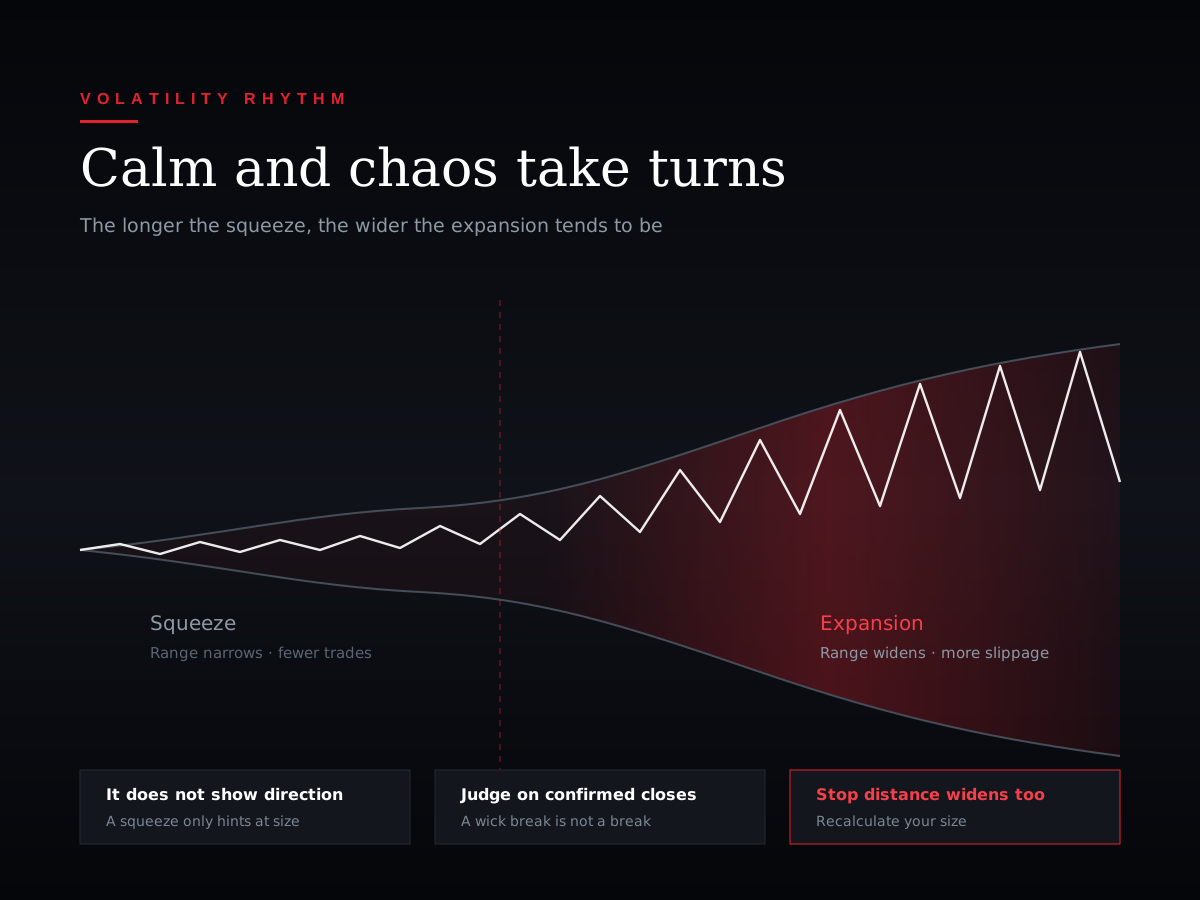
- Maximum spread limit — In stretches where cost has risen, block the entry itself. This matters especially before and after a release.
- Entry count and re-entry wait — Cut off the pattern of hitting straight back after consecutive losses. The frequency itself is a risk.
- Daily loss lock — When the limit is touched, you stop for that day. It is the last line of defense, so we recommend keeping it switched on regardless of your style.
That said, these mechanisms do not guarantee that losses stay within the values you set. A gap, slippage, spread widening, or a communication failure can keep the stop loss from filling at the planned price, and in that case a loss exceeding the limit you set can occur.
This is community learning material and is not investment advice, a personal recommendation, or a solicitation to trade. The conditions organized here are a conceptual explanation, and the actual behavior and setting values have to be checked against the version provided and its configuration documents. No rule guarantees a profit, a loss limit, or a fill at the intended price.







Comments0